Author: James Cheef Wright

  • Without Repentance There is No Forgiveness: What the Scriptures Say About Turning to God

    Without Repentance There is No Forgiveness: What the Scriptures Say About Turning to God

    Proverbs 28:13 "Whoever conceals their sins does not prosper, but the one who confesses and renounces them finds mercy."

    Ezekiel 18:38 "For I take no pleasure in the death of anyone, declares the Sovereign LORD. Repent and live!"

    Zechariah 1:3 "Therefore tell the people: This is what the LORD Almighty says: ‘Return to me,’ declares the LORD Almighty, ‘and I will return to you,’ says the LORD Almighty."

    Matthew 9:13 "But go and learn what this means: ‘I desire mercy, not sacrifice.’ For I have not come to call the righteous, but sinners.”

    Mark 1:15 "The time has come,” he said. “The kingdom of God has come near. Repent and believe the good news!”

    Revelation 3:19 "Those whom I love I rebuke and discipline. So be earnest and repent."

    Repentance: Rarely Preached but Commanded By Jesus

    Whether your are talking about purification, confession, conversion, forgiveness, or salvation, you are talking about repentance. The wisdom of Proverbs, the warnings of the prophets, the teachings of Jesus, and the epistles of the apostles all proclaim the same truth: repentance is essential in both the Old and New Testaments. One of the clearest warnings comes from Romans 2:5, “But because of your stubbornness and unrepentant heart you are storing up wrath for yourself in the day of wrath and revelation of the righteous judgment of God.”

    Repentance is not often preached from the pulpit, and this is a fault of church leaders. Luke 24:47 says, “And that repentance and remission of sins should be preached in His name among all nations, beginning at Jerusalem.” But the preacher is not responsible for your salvation. Your relationship with God — and your understanding of His ways — depends on your knowledge of His Word. And as long as His Word declares that your heart must repent, God will not regard an unrepentant heart as holy, righteous, or having faith in Him. This is a serious matter every believer must examine for themselves.

    What Repentance Is

    Repent on its own can sound like a complicated doctrine, when in fact it simply means to turn your heart from a sin-filled life to a righteous God-filled life. But it is not as simple as merely saying with your mouth that you are changing your ways. Repentance is a deeply profound transformation that begins deep within your heart and manifests in your thoughts, actions, words, and deeds — because it is rooted in genuine regret for your sins against God. Those who say “people don’t change”, yet claim to be God-fearing Christians, have not yet experienced true repentance. This is true because God has declared that all have sinned, and if you have not repented you cannot understand what happens when God changes you.

    So many aspects of a righteous walk with Christ and an intimate relationship with God depends on a heart that has repented. Leaving the past behind, moving from the natural to the spiritual, being born again, and recognizing that you are the Temple of God with His Spirit dwelling within — all of theses begin with a repentant heart.

    As Paul wrote in Philippians 3:13, “Forgetting the past and looking forward to what lies ahead.

    Titus 3:3-5 reminds us of who we are before repenting, and what God wants to do in us: 3. For we ourselves were also once foolish, disobedient, deceived, serving various lusts and pleasures, living in malice and envy, hateful and hating one another.
    4. But after that the kindness and love of God our Saviour toward man appeared,
    5. Not by works of righteousness which we have done, but according to his mercy he saved us, by the washing of regeneration, and renewing of the Holy Ghost.

    And Jesus Himself makes it unmistakable how important repentance is when He declared in John 3:3, “Verily, verily I say unto thee, except a man be born again, he cannot see the kingdom of God.”

    It is impossible to be born again without first repenting, because without turning from sin the Holy Spirit cannot perform the work of regeneration. And without regeneration, you cannot turn your heart toward God — which makes it impossible to be God’s Temple. Repentance opens the door in which the Holy Spirit enters your life. It is the moment the heart turns from darkness to the light of God, allowing His grace to flow through you.

    Without Repentance There is NO Forgiveness

    God cannot work in your life without you first being honest with yourself about your sins, and your need for Him. He is a free will God who will not impose Himself on an unwilling heart. God declares in Isaiah 55:11, “So shall My word be that goes forth from My mouth; It shall not return to Me void, But it shall accomplish what I please, And it shall prosper in the thing for which I sent it.” And Proverbs 28:13 warns us, “Whoever conceals their sins does not prosper, but the one who confesses and renounces them finds mercy.”

    God knows the human heart and its motives. He will not be mocked by performing His works in an unrepentant heart that refuses to bring glory to His name through obedience. We are flawed in this fallen world, and our shame is meant to bring us closer to God — because that very shame leads us to surrender to Him. It is the recognition that we are separated from Him and no longer feel at home in the natural world of iniquity and transgression.

    Repentance leads to forgiveness because it shows God that although you may stumble, your love for Him will not allow you to return to a life of sin. Repentance is the heart turning to God; forgiveness is God turning His face toward you.

    An Act of Faith That God Responds to

    Repentance shows you seek to control your mindset and the thoughts that flow from your soul — it is the first act of faith. An act of faith because it shows God that you recognize you’re weakness in the flesh and your need for His strength to walk in the Spirit. It is proof that you have come to understand what Jesus was teaching when He said, “Watch and pray so that you will not fall into temptation. The spirit is willing, but the flesh is weak.” Faith is knowing that God will protect and provide for you without requiring you to sacrifice your integrity. Faith is finding pleasure in God’s ways and in the company of His people — because your heart has turned away from ungodly ways and ungodly people.

    A New Life When Hearing the Voice of The Shepherd

    When you repent of your sins, your desires change — and this leads to a new life. Instead of settling for “it’s just the way I am” you embrace who you are becoming in Christ Jesus. Instead of staying rooted in how you were raised, you allow the pruning process of God to remove branches in your life that cannot produce good fruit. Repentance makes room for God in your life, and as He removes that which is contrary to Him, you begin to experience the Godliness He placed within you before you were even in the womb — chosen by God before birth.

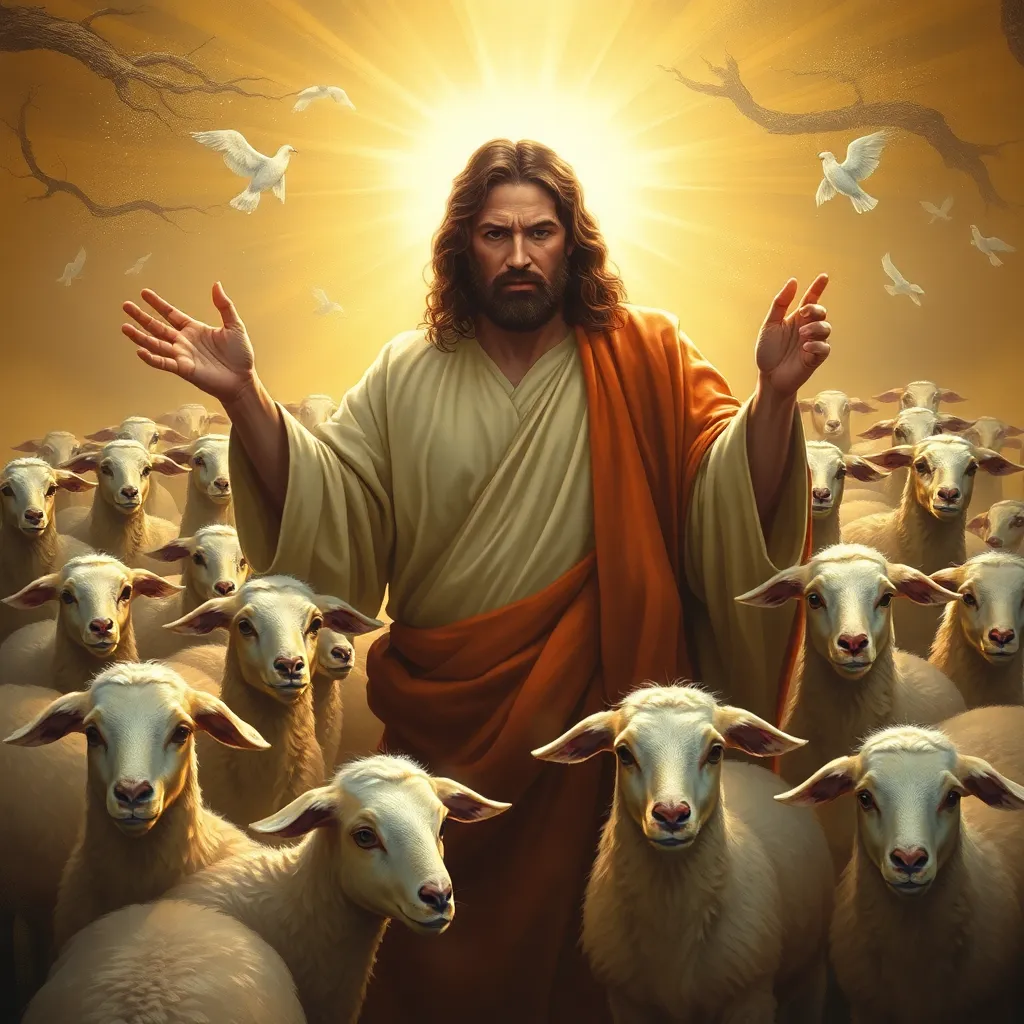
    In this world, God has simply been waiting for you to hear the voice of the Shepherd. And once you do, everything changes. Just as Jesus said in John 10:27-28: “My sheep hear my voice, and I know them, and they follow me: I give them eternal life, and they shall never perish; no one will snatch them out of my hand.”

  • The Spirit of God Dwells in You: Becoming the Temple of the Living God— 1 Corinthians 3:16-17

    The Spirit of God Dwells in You: Becoming the Temple of the Living God— 1 Corinthians 3:16-17

    16. Know ye not that ye are the Temple of God, and that the Spirit of God dwells in you?
    17. If any man defile the Temple of God, him shall God destroy: for the Temple of God is holy, which Temple ye are.

    The Holy Spirit Gives Life to Your Spirit

    Once a Christian is born again — born from above — God begins the ongoing work of regeneration in the life of the believer. In our natural state, even with faith alone, we are not fit for the Kingdom of God. This is exactly what Jesus was explaining to Nicodemus in John 3:6: “That which is born of the flesh is flesh, and that which is born of the Spirit is spirit.” The New Living Translation makes it even clearer: “Humans can reproduce only human life, but the Holy Spirit gives birth to spiritual life.”

    In John 14:17, 15:26, and 16:13, Jesus calls the Holy Spirit the Spirit of Truth. The Holy Spirit can only bear witness with our spirit if we believe God’s truth: that He sent His only begotten Son, who bore our sins, died on the Cross, was buried, and rose on the third day — defeating death, healing us through His stripes, and making those who believe righteous through His shed blood. This is the Holy Gospel, and our faith as believers is rooted in it. In order to receive the Holy Spirit, faith must be rooted in the heart, not merely confessed with the mouth.

    Revealed by the Risen Christ Not Taught by Man

    Although Paul did not interact with Jesus during His earthly ministry, he did receive direct revelations from the risen Christ after encountering Him on his way to Damascus. Concerning the Gospel, Paul tells us in Galatians 1:12: “For I neither received it of man, neither was I taught it, but by the revelation of Jesus Christ.” God revealed His Son in Paul and appointed him as the chosen vessel to preach the Gospel to the Gentiles (Galatians 1:15,16). After this calling, Paul spent three years in Arabia and Damascus before going to Jerusalem to meet with Peter and “James, the Lord’s brother” (Galatians 1:18,19).

    The disciples — not only the Twelve — received the Holy Spirit on the day of Pentecost (Acts 2). But in Paul we see something more: not only the work of regeneration by the Holy Spirit, but also the sanctifying work of enlightenment that comes only from the Holy Spirit dwelling within. By revelation of the risen Christ, Paul possessed an understanding of the Spirit’s indwelling that was much deeper than any of the disciples — who, even though they walked with Jesus, still wavered in faith at times.

    A Temple Built by God Not by the Hands of Men

    The Old Testament gives us an example for today: God revealed His truth and His judgments to prophets, judges, and kings who then delivered them to believers and unbelievers. In a similar way, Paul is an example of how the Holy Spirit reveals Christ within the believer — and how the Spirit convicts of sin to keep our walk holy and aligned with God.

    The regenerating work of the Spirit makes the believer the Temple of God. This work fulfills a prophecy Jesus spoke to the Samaritan woman at the well when He said, “Woman, believe Me, the hour is coming when you will neither on this mountain, nor in Jerusalem, worship the Father.” God is now found in the hearts of those made spiritually alive by His Spirit — no longer in structures made with hands.

    You Are That Temple

    In an attempt to comfort the disciples in His physical absence, Jesus tells them in John 16:7 that unless He goes to the Father, the Holy Spirit will not come to them. The Holy Spirit is mentioned sparingly in the Old Testament, so the disciples would have been just as clueless about the promise of His coming, as Nicodemus was when Jesus spoke of being born again. Imagine the fear this would have stirred in them: their Teacher, Protector, and Comforter would no longer walk beside them. Leaving their hearts empty, with countless questions to be asked, and many answers still hidden from them.

    Jesus provided the solution to their fears only a few statements later in John 16:13 when he declared, “However, when He, the Spirit of truth, has come, He will guide you into all truth; for He will not speak on His own authority, but whatever He hears He will speak; and He will tell you things to come.” Their pain and confusion would have shaded their hearts from this good news. But for us today, our hearts should be enlarged with joy — because the Spirit of Jesus dwelling within us makes us the Holy Temple of God. This is the same truth that emboldened Paul to travel wherever the Spirit directed him, preaching the Gospel and establishing churches.

    Living as God’s Holy Temple

    As the living Temple of God, believers are called to live Godly lives. Our sacrifices are no longer the blood of bulls and goats, but the sacrifices of praise and thanksgiving to God. We live Godly by abandoning the desires of the flesh —the very desires that once practiced sin, and created separation from God. Instead, we walk in the Spirit, producing the fruit of the Spirit. We know we are born from above when love, joy, peace, longsuffering, gentleness, goodness, faith, meekness, and temperance manifest in our lives because, these are the fruit of the Spirit (Galatians 5:22,23).

    The work of the Holy Spirit is ongoing — shaping the thoughts and actions of the believer so they align with God’s commands for all and His will for each of us individually. He does this by revealing the truth about the world around us and showing how it aligns (or conflicts) with God’s truth. When our thoughts, actions, words, or deeds drift from Christlikeness, the Spirit will convict us by stirring a holy discomfort within. Every conviction is an invitation to return to righteousness. But every time we ignore His conviction, we grieve the Holy Spirit, and our lives drift further from God’s righteous path. Ephesians 4:30 is a stern warning against this, “And do not bring sorrow to God’s Holy Spirit by the way you live. Remember, he has identified you as his own, guaranteeing that you will be saved on the day of redemption.”

    Just as God allowed the physical Temple to be destroyed when it was repeatedly defiled, the Temple of the believer will also face judgment if defilement becomes a pattern. Paul warns in 1 Corinthians 3:17, “If any man defile the Temple of God, him shall God destroy: for the Temple of God is holy, which Temple ye are.” These words should not be taken lightly. God will bring one of His children home early, rather than risk them falling back into the bondage of sin and the hands of the evil one — the same way he allowed the physical Temple to be destroyed rather then let pagans mock and defile His Holy ground.

    A Blessing Paid for With the Shed Blood of Christ Jesus

    Although the warning is sobering, the privilege of being the Temple of God is a great honor that comes without burden. It means never being alone (John 14:18), because the Holy Spirit not only dwells within you but walks beside you — constantly communing with your spirit and guiding you into all truth (John 16:13). He gives strength in times of weakness as you lean on His holy walls, steadying your feeble knees so you may walk upright in righteousness. Your countenance becomes a testimony, drawing others because the God-Light shines through you — and ever brighter when your holiness during storms brings glory to His name.

    With the Holy Spirit, you have endless access to the peace that only Jesus can give, because He is the comforter who reminds you that Christ is with you always (Matthew 14:26). Being God’s Temple is a blessing paid for by the shed blood of Jesus Christ. A gift available to anyone who believes in their heart that Jesus Christ is their Lord and Savior.

    Amen.

  • Born Again by Water and Spirit: Understanding Spiritual Birth in John 3:5-7 (Part 2)

    Born Again by Water and Spirit: Understanding Spiritual Birth in John 3:5-7 (Part 2)

    5. Jesus answered, Verily, verily I say unto thee, except a man be born of water and the Spirit, he cannot enter into the kingdom of God.
    6. That which is born of the flesh is flesh, and that which is born of the Spirit is spirit.
    7. Do not be amazed that I said to you, 'You must be born again.'

    Understanding What It Means to Be Born of Water and the Spirit

    In Part One we discovered that “born again” is best understood as “born from above,” because although anōthen can mean again or from above, John consistently uses it to mean “from above” in his Gospel. But whether we say born again or born from above, we still must answer two essential questions: What does it mean? And how can we know a spiritual birth has truly taken place in us?

    As always, scripture itself will answer these questions. One of my favorite principles in Bible study is “scripture for scripture” — letting the Word interpret the Word. This simply means using parallel passages to enlighten us to the passage we are studying. And in this case, “water” and “Spirit” are foundational to scripture. As such, they are foundational to understanding what Jesus meant when He said, “Except a man be born of water and the Spirit, he cannot enter into the kingdom of God.”

    Before answering what it means to be born again, we must know how to get to a place in natural life to be born again. Jesus answers this when He tells Nicodemus, “a man must be born of water and the Spirit.” So let us begin with water.

    The Three Theories About What “Born of Water” Means

    There are three major theological theories about what Jesus meant when he said a person must be born of water.

    One theory suggests that Jesus is referring to natural birth and amniotic fluid. However, nothing in Jesus’ words points to natural childbirth. Other than Nicodemus mentioning the womb, natural childbirth isn’t a part of the discussion. Plus historically, the ancients did not make reference to water when speaking of pregnancy or childbirth. And no where in the Bible is water used that way.

    Another theory claims that “born of water” is referring to baptism. Although based on certain theological traditions, it does not fit the context of Jesus’ conversation with Nicodemus. This is because at the time, the baptisms John was performing were for repentance of sins. Unlike Christian baptisms that symbolize being united with Christ in His death and being raised with Him — a picture of new birth. But Christian baptisms had not been established at the time Jesus was speaking with Nicodemus about being born again.

    The Biblical View: Water as Cleansing and Spirit as Regeneration

    A final theory is not only rooted in theology — it is rooted in Scripture itself. This view holds that Jesus was referring directly to Ezekial 36:25-27, a prophecy that addresses both water and the Spirit in the context of God’s promised work of renewal. Through the prophet Ezekial, God says to the house of Israel:

    25 I will also sprinkle clean water on you, and you will be clean. I will cleanse you from all your impurities and all your idols. 

    26 I will give you a new heart and put a new spirit within you; I will remove your heart of stone and give you a heart of flesh. 

    27 And I will put My Spirit within you and cause you to walk in My statutes and to carefully observe My ordinances.

    As I pointed out in Part One, Nicodemus — a teacher of Israel — should have immediately recognized this passage. Jesus was not introducing Nicodemus to a new concept, he was directing him back to a prophecy he was no doubt familiar with. He should have realized that Jesus was using water symbolically to express the cleansing and washing away of unrighteousness in the life of the sinner — because the unrighteous cannot enter the kingdom of God. He should have also recognized that the Spirit refers to God’s Spirit doing the work of inward renewal, giving a new heart, and the ability to be obedient to God.

    How the New Testament Clarifies the Meaning of “Born of Water”

    For the New Testament Christian, the meaning of “born of water” becomes clearer when we read just one chapter further. In John 4:10 after asking the Samaritan woman at the well for a drink, Jesus says to her:

    If you knew the gift of God, and who it is who says to you, ‘Give Me a drink,’ you would have asked Him, and He would have given you living water.

    Just as Nicodemus was confused by Jesus’ words, so was the Samaritan woman. But Jesus did not rebuke her because, she did not have expert knowledge of the Torah or the prophets — unlike Nicodemus, a teacher of Israel who should have known the Scriptures. Instead, He explains what He means by “living water.” In John 4:14 He says:

    but whoever drinks of the water that I will give him shall never be thirsty; but the water that I will give him will become in him a fountain of water springing up to eternal life.”

    Just as the Father had done in Ezekial 36 to describe cleansing and renewal of the house of Israel, the Son also uses water symbolically with the Samaritan woman to describe the life-giving, cleansing work that leads to eternal life. Parallel Scriptures where water represents: cleansing, renewal, and the removal of unrighteousness. The very process Jesus explained to Nicodemus as being necessary to enter the kingdom of God.

    How the Spirit Gives New Life to the Believer

    It is the Holy Spirit that performs the work of regeneration — giving the believer a spiritual heart, and making them a new creation. No apostle speaks more boldly about the Spirit’s work than Paul.

    In 1 Corinthians 3:16 he reminds us:

    Know ye not that ye are the Temple of God, and that the Spirit of God dwells in you?

    And in 2 Corinthians 5:17 (NLT) he declares:

    This means that anyone who belongs to Christ has become a new person. The old life is gone; a new life has begun!

    It is the Holy Spirit who convicts us of sin and leads us to repentance. He holds a mirror to our lives, exposing our once ignored ungodliness. He gives us the desire to be obedient to God and restrains language, habits, and desires that once separated us from God. This is the work of regeneration — a transformation that begins in our spirit and renews our soul, making us a new creation from the inside out.

    Jesus Will Know IF You’re Born Again

    Jesus was explaining to Nicodemus that his knowledge of the Scriptures — even his position as a teacher in the synagogue — would not give him entrance to the kingdom of Heaven. And today, there are many modern-day Nicodemuses on both sides of the pulpit.

    Faith is not inherited from parents or guardians. Even if they’ve had you baptized when you were a child, that does not mean you were born again. Church attendance, religious activity, and the ability to quote Scriptures does not create a relationship with God. Tradition cannot purify the heart. Memorization cannot cleanse the soul. And outward religion cannot produce inward regeneration.

    Jesus says something in Matthew 7:23 that is bluntly unmistakable and cannot be misunderstood. His words strike the core of every believers faith and obedience, leaving no doubt that only those who are truly born again will enter the kingdom of God.

    Jesus declares in Matthew 7:23:

    “And then I will declare to them, ‘I never knew you; depart from Me, you who practice lawlessness!

    Born again does not mean without sin, but the born again believer no longer makes a practice of sin. Their life is no longer characterized by rebellion, but by a desire to be obedient.

    You Will Know IF You’re Born Again

    Jesus understands the true nature of a persons heart. When He quoted Isaiah in Matthew 15:8, He said, “These people honor me with their lips, but their hearts are far from me.” He was exposing a timeless truth: expressions of religion can imitate faith.

    Accepting Jesus Christ as Lord and Savior has to be believed with the whole heart — not merely spoken with the lips. Only then does God send His Spirit to begin the work of regeneration. And once that work begins, the believer will notice subtle, but unmistakable changes: desires shift, habits become easier to break while losing their grip, and ungodly people will fall away — often without any conscious effort.

    These changes are not self-improvement; they are the evidence of a spiritual birth. Spiritual birth rarely hits with a bang — the celebration happens in Heaven. Jesus tells us in Luke 15:10: “In the same way, I tell you, there is joy in the presence of the angels of God over one sinner who repents.” When the Spirit regenerates a person, Heaven rejoices, even if the believer themselves feels the change subtly at first.

    In the end, Jesus’ words to Nicodemus and to the Samaritan woman at the well unite into a single truth: spiritual birth is God’s cleansing and His Spirit making us new and acceptable for the kingdom of God — and those who are born again from above will bear evidence of it.

  • John 3:3–5 Explained — What It Really Means to Be Born Again (Part 1)

    John 3:3–5 Explained — What It Really Means to Be Born Again (Part 1)

    3. Jesus answered, and said unto him, Verily, verily I say unto thee, except a man be born again, he cannot see the kingdom of God.
    4. Nicodemus saith unto Him, How can a man be born when he is old? Can he enter the second time into his mothers womb, and be born?
    5. Jesus answered, Verily, verily I say unto thee, except a man be born of water and the spirit, he cannot enter into the kingdom of God.

    Common Misunderstandings About Being Born Again

    If you ask a Christian if they have been born again, most will quickly answer yes. But if you ask them how do they know they’ve been born again, the answers vary. Some point to being raised in church or believing in God. Others mention being baptized or having accepted Jesus Christ as Lord and Savior. Some may even point to the promise in Scripture of eternal life. There is nothing wrong with these answers as expressions of faith — but are any of them proof of being born again?

    Being born again is one of the most misunderstood aspects of Christian life. And like most things that are misunderstood, it is often taken for granted. This should concern every self-proclaimed Christian, because Jesus made it unmistakably clear in John 3:3 (NIV): “Very truly I tell you, no one can see the kingdom of God unless they are born again.” There is nothing confusing about that statement. There is no reason to over-complicate it by cherry-picking doctrines about law and grace, or faith and salvation.

    So what exactly does it mean to be born again? How can a person know with certainty that they have been born again? And perhaps the most sobering question of all: am I truly right with God if I cannot answer these questions?

    Although the concept of being born again sounds simple to understand, not even some of the most learned religious leaders and teachers — in the days of Jesus or today — are able to comprehend it with a surface level reading of the text. So there is no reason to feel as if you are failing in your faith, if you don’t understand it.

    Nicodemus: A Religious Man Still in the Dark

    John 3 introduces us to Nicodemus, a Pharisee. According to the first-century historian Josephus Flavius, there were 6,000 Pharisees during the time of Jesus’ earthly ministry. They prided themselves on separation from Gentile influence and held a strict adherence to the Mosaic law. They were experts in the Torah, many knowing it by heart. Most Pharisees were landowners, businessmen, and synagogue leaders — respected, educated, and morally disciplined.

    But Nicodemus was not just any Pharisee. He was a member of the Sanhedrin, the highest Jewish ruling council — the closest equivalent to a Supreme Court. The Sanhedrin was led by the high priest and composed of chief priests, elders, scribes, Pharisees, and Sadducees. It held authority over Jewish religious, civil, and criminal matters. It was the Sanhedrin that held a sham trial — a kangaroo court — to condemn Jesus before His crucifixion.

    Yet, even with expert knowledge of the Torah and the prophets, Nicodemus still could not comprehend what Jesus meant when He said, “except a man be born again, he cannot see the kingdom of God.” But, when we look deeper into the text, we discover not only why Nicodemus was confused, but why many Christians today are as well.

    The Dual Meaning of Anōthen — Again or From Above?

    In John 3:3, the phrase “born again” is translated from the Greek gennēthē anōthen. The word anōthen carries a dual meaning. One meaning is again, and it can also mean from above. It is not entirely clear why Nicodemus interpreted Jesus’ words to mean “born again,” especially when Jesus immediately connected the phrase to “see the kingdom of God.” It is also noteworthy that John makes no attempt to clarify the meaning for his readers. The most reasonable explanation is that John assumed his audience would understand that Jesus meant born from above.

    John uses the term anōthen in other passages, and he always uses it to mean “from above“. In John 19:23 when describing Jesus’ coat, he writes that is was woven “from the top throughout.” And in John 3:31 he declares, “He who comes from above, is above all.” John consistently uses anōthen to mean “from above,” not “again.”

    Jesus’ Patience With Nicodemus’ Confusion

    A lesson we can learn from Jesus in this dialogue is the remarkable patience He showed toward Nicodemus. Despite Nicodemus’ expert knowledge of the Torah and the prophets, he was utterly confused by what Jesus was saying. Asking — “Can he enter the second time into his mother’s womb?” — was illogical and beneath the intelligence and training of a member of the Sanhedrin. As He often did with other Pharisees, Jesus did not rebuke Nicodemus. Instead, He simply and patiently said with clarity, “except a man be born of water and the spirit, he cannot enter into the kingdom of God.” This statement should have made what Jesus meant, absolutely clear to Nicodemus.

    “Born of Water and Spirit” — A Prophecy Nicodemus Should Have Known

    With his knowledge of the prophets Nicodemus should have immediately recalled Ezekial 36:25-27 where God promises Israel a future cleansing and spiritual renewal:

    25. “I will also sprinkle clean water on you, and you will be clean. I will cleanse you from all your impurities and all your idols. 

    26. I will give you a new heart and put a new spirit within you; I will remove your heart of stone and give you a heart of flesh.

    27. “And I will put My Spirit within you and cause you to walk in My statutes and to carefully observe My ordinances.

    Jesus had not made a new revelation to Nicodemus. The promise of spiritual rebirth — cleansing, regeneration, and the indwelling of God’s Spirit — had been given to Israel centuries earlier. In seeking righteousness through the law, and his prominent religious status, it seems Nicodemus had forgotten the very prophecy that explained what Jesus meant. Being “born of water and the Spirit” was not a new idea; it was the the prophesied work of redemption that would cleanse God’s people, renew their hearts, and restore glory to His name.

  • God Is Spirit — Understanding John 4:24 and Worshiping in Spirit and Truth

    24. God is a Spirit: and they that worship him must worship him in spirit and in truth.

    It may be human nature, or it may be lack of understanding, but many people tend to think of God as if He were human. Speaking of Him as if He reacts the way we do, feels the way we feel, or responds the way that we respond. I often hear people speak about God making someone pay who has wronged them, even politicians they disagree with. As if God is their personal judiciary, obligated to carry out their sense of justice.

    Others treat prayer as a one-sided session of requests, wants, and desires, as if God exists to serve them. It is true, God is the judge of all the earth. Yes, He does provide our needs and even our desires according to His will. But is it possible to truly know God and still treat Him like a servant? Can there be a desire to be obedient to God if the relationship is one-sided, and one side continually takes God for granted? How can there be intimacy with God without seeking to know His desires?

    Jesus told the Samaritan woman at the well: “God is Spirit.” Until we understand what that means we will never approach Him as He truly is. But before we can understand how to approach God, we must first understand who God is — and to know who He is, we must know His name.

    I AM vs Pagan gods

    In the ancient world, a pagan gods name determined what the deity depended on. Ra was the Sun god of Egypt. Baal was the Canaanite storm god. Artemis of Ephesus was the fertility goddess. In fact, in Egypt alone, during the days of Moses, Egyptian texts name over 1,400 deities. — each tied to a specific force of nature or human need.

    But when Moses asked God what name he should give the Israelite’s, God did not identify himself with the sun, moon, stars, harvest, or fertility. He did not tie Himself to anything created — showing that His being was not dependent on anything created.

    Instead God said to Moses: “I AM WHO I AM.” And He said, “Thus you shall say to the children of Israel, ‘I AM has sent me to you.”

    The pagan gods of the nations were made by the hands of men. They never appeared to anyone, never sent angels to speak on their behalf, or chose prophets as their voice on earth. Their names revealed their limitations — Ra depended on the sun, Baal on storms, Artemis on fertility.

    With the words “I AM WHO I AM” the God of Israel revealed that He is not defined by creation — He is the creator. Revealing His nature as: self-existent, existing before time itself, eternal, unchanging, and independent of all things. These are the very attributes that allow us to begin understanding what Jesus meant when He said, “God is Spirit.”

    Because He is Spirit, God is omnipresent — everywhere at all times. David asks in Psalm 139:7, “Where can I go from Your Spirit? Where can I flee from Your presence?” There is no place where God is not.

    Because He is Spirit, God is omniscient — knowing all things past, present, and future. As David declares in Psalm 139:2, “You know when I sit and when I rise; You perceive my thoughts from afar.”

    And because He is Spirit, God is omnipotent — all‑powerful. The angel told Mary in Luke 1:37, “For with God nothing shall be impossible.

    We cannot understand nor access God on a human level. As such, we must do so on a spiritual level — worship Him in Spirit. Physical worship and fellowship are necessary, but should not be the only ways we communicate with and show our reverence for God.

    To worship God in Spirit you must do so with your heart, mind, and soul.

    1. We engage God with our heart through an active prayer life.

    This means we do not treat prayer as a dialogue, but as a monologue with God — we speak to and listen to God. We offer thanksgiving with our prayers, as Hebrews 13:15 teaches: “offer through Jesus a continual sacrifice of praise to God, proclaiming our allegiance to his name.

    It is not always about a prayer posture, it is also about presence. Prayer can be done anywhere, at any time, in any circumstance.

    In 1 Thessalonians 5:16-17 Paul tells us to “Rejoice always, Pray without ceasing.” Prayer walks in the morning sun are a beautiful way to converse with God. Pray while commuting, Pray whenever you feel the need — because prayer is the foundation of worship.

    2. We engage God with our mind by meditating on His Word.

    Scripture is inspired by the Holy Spirit, and when we meditate on the Word we not only open our spiritual eyes, we allow the Holy Spirit to communicate with our spirit. Romans 8:16 teaches us, “The Spirit himself testifies with our spirit that we are God’s children.

    This is why Hebrews 4:12 says, “For the word of God is alive and active. Sharper than any double-edged sword, it penetrates even to dividing soul and spirit, joints and marrow; it judges the thoughts and attitudes of the heart.” God often uses His Word to give instruction, warnings, correction, encouragement, and even reveal His will for us.

    3. We engage God with our soul by aligning our thoughts with the Spirit.

    Our thoughts are indicative of the state of our soul. Our thoughts, desires, and intentions must be shaped by the Spirit of God. Philippians 4:12 instructs, “Finally, brothers and sisters, whatever is true, whatever is noble, whatever is right, whatever is pure, whatever is lovely, whatever is admirable—if anything is excellent or praiseworthy—think about such things.”

    As born-again believers in Jesus Christ, we should have thoughts of eternal value. Colossians 3:1 declares: “Since you have been raised to new life with Christ, set your sights on the realities of heaven, where Christ sits in the place of honor at God’s right hand.

    When we worship God in Spirit we bring our heart, mind, and soul into alignment with Him. It means not approaching Him as though He were human, but as the eternal, ever present, all knowing, all powerful Spirit that He is.

    Worship God in Truth

    To worship God in truth is to simply know God’s truth. Since all scripture is inspired by the Spirit of God, the only way to know God’s true character and nature — worship Him in truth — we must immerse ourselves in His Word. We understand this instinctively when we want infatuation to grow into love. In a romantic relationship, you get to know a persons true character by their actions and their words. In the beginning, we hang on their every word to see if their actions match what they say. Over time, this is how we learn who they truly are.

    In the same way, we are to meditate on the Word of God. When we hang on every Word God has spoken, we not only come to know God — we also learn how His Word takes action in our lives. Scripture reveals His character and nature — His heart, His will, His desires for His children, His warnings as a protector, His promises out of love. Ultimately, His ways.

    Believing God exists and knowing who God is through having a relationship with Him are not the same. Many believers attend church on Sunday, sit through Sunday school, and even participate in Bible study, yet still do not know who God is or walk in relationship with Him. When you are in a relationship with God, you believe God — you trust His character, you submit to His authority, and you understand your position as His servant. But when you merely believe in God you treat Him like a servant. These are they who eagerly quote Matthew 7:7 “Ask, and it will be given to you,” but ignore Matthew 7:1-2 which warns “Judge not, that ye be not judged. For in the way you judge, you will be judged; and by your standard of measure, it will be measured to you.

    The servant can be confident when he or she asks anything of God because they know how to please Him — they have intimate knowledge of who He is. Intimacy with God bears the fruit of worshiping Him in spirit and in truth. As believers, this is how we come to know God’s truth, and this is how we approach Him as He truly is.

  • Titus 3:3-5 Devotional — From Natural to Spiritual Through God’s Mercy

    3. For we ourselves were also once foolish, disobedient, deceived, serving various lusts and pleasures, living in malice and envy, hateful and hating one another.
    4. But after that the kindness and love of God our Saviour toward man appeared,
    5. Not by works of righteousness which we have done, but according to his mercy he saved us, by the washing of regeneration, and renewing of the Holy Ghost.

    It is no secret — and often said — that we live in a fallen world. There is no better proof of this than our natural attraction to what harms us and our resistance to what is good. Why is it that good girls like bad boys? Why do boys want to be “bad” in the first place? Why do we associate pleasure with the very things we come to regret, even though as children we were warned against them. There are many examples that show our pleasure principle leads to pure vanity. So why do most of us spend our youthful peak years feeding our flesh?

    It may surprise many, but God’s perfect order for mankind is that we begin life in our natural, before we come to understand who we are spiritually. Paul explains this in 1 Corinthians 15:46: “However, the spiritual is not first, but the natural; then the spiritual.” What Paul is saying is, our spirits first dwell in earthly, natural bodies before we receive our eternal, spiritual bodies. The natural comes first — and with it, all the impulses, desires, and weaknesses that Titus 3:3 describes so honestly,.

    But there are other examples in Scripture that show it is God’s will for the natural to precede the spiritual. Ishmael — born of the flesh — came before Isaac, the child of promise. Cain, who thought he could choose how to please God and rejected God’s instruction, came before Abel, whose obedience pleased God. Esau, who sold his birthright to satisfy a momentary craving, preceded Jacob, who God later named Israel — the father of the twelve patriarchs from whom the twelve tribes of Irael came. Scripture continually shows us this pattern: first comes the natural, revealing the weakness of the flesh, and then the spiritual follows, revealing the power and purpose of God.

    This natural-then-sprititual order is unique to mankind. Scripture shows that before God created humanity and earthly creatures, He had already created spiritual beings that dwelled in the heavenlies — angels who could observe mankind and even walk the earth. Job 38:7 tells us that “the morning Stars sang together, and all the sons of God shouted for joy” when God laid the foundations of the earth. Genesis 6:2 speaks of the angels who abandoned their proper place in Heaven, saying, “the sons of God saw the daughters of men, that they were fair, and they took to them wives, of all which they choose.” But even these were not the first to rebel against the spiritual order God established.

    God’s will for the natural to come before becoming spiritual only makes sense when we consider the fall of Lucifer. Ezekial 28 gives a vivid description of who Lucifer was before iniquity was found in him. Verse 12 describes him as “full of wisdom, and perfect in beauty.” Verse 13 reveals “Thou hast been in Eden the garden of God; every precious stone was thy covering,” showing the honor and splendor God had given him. Verse 14 goes even further: “Thou art the anointed cherub that covereth; and I have set thee so.” These verses reveal the extrodinary trust and authority God placed in Lucifer. And verse 15 tells the tragedy of his fall: “Thou wast perfect in thy ways from the day that thou wast created, till iniquitie was found in thee.”

    Most people say the first sin in the world was the partaking of the forbidden tree. But few recognize that the first sin in the universe was the pride of Lucifer. Pride is the same sin he used on Eve when he told her in Genesis 3:5, “you will be like God.” The exact words Lucifer said in his own heart that led him to oppose God. This is why God hates pride in man. Pride corrupted a perfect spiritual being, and pride led humanity into rebellion. Yet it was also Lucifer’s fall that led God to create mankind in His own image — lower than the angels, yet possessing something the angels do not have: free will.

    It wasn’t a curse, and we did not have a choice about being born into this world already marked by spiritual decline and moral depravity. But we do have a choice about whether we stay in that natural state of mind or embrace the spiritual life that God breathed into us from the beginning. Before mankind, all of God’s creations were spoken into existence. But with Adam, God did something different — He breathed His own breath into Adam giving him life, and that same breath gave life to each of us.

    Adam and Eve were made glorious, clothed in a heavenly countenance that covered their nakedness. But when sin entered, their glory was lost. Their fleshly eyes were opened, their nakedness exposed, and spiritual blindness took hold. Sin had become woven into the human DNA.

    Not only do we have free will — we also have redemption, another attribute the angels do not receive. As Titus 3:3 says, we all begin life “foolish, disobedient, deceived, serving various lusts and pleasures, living in malice and envy, hateful and hating one another.” This is our “before Christ” condition, inherited through the tainted bloodline of sin. But once we accept Jesus Christ as our Lord and Savior, His shed blood cleanses us of our sins and all unrighteousness. The Holy Spirit comes to dwell within us, making our bodies the temple of God. From that moment, the Holy Spirit begins His work of regeneration — the renewing of our minds and the transformation of our hearts. As 2 Corinthians 5:17 declares: “Therefore, if anyone is in Christ, he is a new creation; old things have passed away; behold, all things have become new.” This is the true definition of being born again.

    And this is a beautiful thing, because we begin to form an intimate relationship with our Father God. His Spirit begins to reveal truths not only about who He is, but about who He created each of us to be. His kindness and love, shed abroad in our hearts, begins to manifest in our daily lives. Instead of fear-laden thoughts filled with worst-case scenarios, our minds become courage-filled with the expectation of God’s best. Not because we deserve anything good, but because we are now right with God. He blesses the believer so that we can become a blessing to others — and in doing so, our lives bring glory to Him.

    This is how we know that God loves us — because He does not give us what our rebellion deserves. He did not turn His back when Adam and Eve fell to the influence of the evil one. Instead, He appeared asking Adam, “Where are you” (Genesis 3:9) God knew exactly where Adam was physically, but He also knew Adam had been lost spiritually. This same heart of God is revealed again when Jesus says in Revelation 3:20: “Behold, I stand at the door and knock. If anyone hears My voice and opens the door, I will come in to him and dine with him, and he with Me.”

    We begin as lost sheep, wandering the earth in the natural condition described in Titus 3:3. But God, in His mercy, reaches out to each and every one of us, calling us by name. And for those of us who truly answer His call, He restores, He renews, and He brings us back into fellowship with Himself. Not because He is obligated to, but because He has watched His perfect creation rebell against Him, and go on to bring down His weaker creation. But through Christ Jesus, we the fallen are raised from the natural to the spiritual, from death to eternal life.

    Amen.

  • Warning Against False Teachers: An Exegesis of the Book of Jude

    Warning Against False Teachers: An Exegesis of the Book of Jude

    Jude, whose Hebrew name is Judah, identifies himself as “Jude the servant of Christ and brother of James…” As the brother of James, Jude would also be half-brother to Jesus. Half brothers because none of Jesus’ siblings shared the untainted blood of God. Though they all shared the blood of Joseph, Jesus’ earthly father, and were all born of Mary. This may be why, although not as well-known as the other disciples, he was respected enough that at least one of his letters was included in the New Testament.

    During Jesus’ earthly ministry, His own brothers did not believe he was the Messiah. John 7:5 tells us “For neither did his brethren believe in Him.” And Mark 3:21 gives an even more vivid illustration of their early disbelief: “When His own people heard of this, they went out to take custody of Him; for they were saying, “He has lost His senses.”

    This explains why Jude, like his brother James, was not among the 12 disciples. But Paul records something remarkable in 1 Corinthians 15:7: “After that, he was seen of James, then of all the Apostles.” It is striking that Jesus chose to appear to His brother — one who had not believed in Him — before appearing to the disciples who had followed Him. It suggests that James, and later Jude, became became believers after the risen Christ appeared to James personally.

    Jude, like James, addresses himself as a “servant of Jesus Christ”, choosing reverence for Jesus over a claim to familial ties. Yet in the same breath he acknowledges being the “brother of James” which humbly affirms his identity without pridefully elevating himself. This shows how deeply Jude came to believe in Jesus — a belief strong enough to transform him from an unbeliever into a leader in the early church. As someone whose life was personally changed by the resurrection, Jude’s teachings carried a weight that a distant observer, even one that was trained by the apostles or even by Paul himself, could not possess.

    Jude’s letter shows just how deeply concerned he was with the direction and stability of the early church. Though his epistle is only one chapter, its intent is direct and unmistakable. In verse 3 he writes, “Beloved, when I gave all diligence to write unto you of the common salvation: it was needful for me to write unto you, and exhort you that you should earnestly contend for the faith which was once delivered unto the Saints.”

    By using the term of endearment “beloved” shows his compassion and concern for the Church. It also reveals that he was being moved by the Spirit as he wrote. His original intention was to write about what he refers to as the “common salvation.” Common salvation is the universal gift of being saved by grace through faith in Jesus Christ — the shared outcome all Christians enjoy. But the “faith delivered to the Saints” is something different. It is the Gospel itself — the good news, the message, the truth that our faith is built upon and that upholds our salvation. Jude is distinguishing between the outcome of salvation and the foundation that produces it.

    Like all the apostles after Jesus, Jude was deeply concerned with false teachers slipping into the Church and twisting the Gospel truth. This is the reason for his change in direction — from wanting to write about our common joy in our shared salvation to feeling compelled to write about protecting the truth of the Gospel itself. Jude knew that a corrupted message produced a distorted salvation.

    Jude was highly aware of the stealthy infiltration of false teachers into the early church. As a leader, it was within his authority — and his responsibility — to warn believers who were unaware of the spiritual “spies” among them whose only intent was to twist the Gospel. Perverting it by teaching that since God forgives sin, immorality — including sexual lewdness — was an acceptable lifestyle for believers. These false teachers would prey on the minds of the early believers and new converts, whose faith was still growing and had not yet taken root in their hearts. Teaching them to deny that a risen Jesus had the authority to set moral standards for their lives. Because he was well-versed in the Old Testament, he knew the fate awaiting such false teachers when he wrote in verse 4, “The condemnation of such people was recorded long ago.”

    What Jude writes in verses 5-7 shows that the human mind has not changed since the beginning of mankind. And this means that since human nature has not changed, neither has God’s judgment. In verse 5 he writes,“I will therefore put you in remembrance though you once knew this…” He reminds his readers that even though God brought the Hebrews out of Egypt, He later destroyed those who fell into the sin of unbelief.

    In verse 6 Jude turns to the disobedient angels: “And the angels which kept not their first estate, but left their own habitation, He hath reserved in everlasting chains under darkness, unto the judgment of the great day.” These angels rejected God’s authority and sealed their own fate.

    Then in verse 7 he reminds us that Sodom and Gomorrah are examples of the judgment of sexual immorality. Writing that they are “suffering the vengeance of eternal fire.”

    Jude reminds believers — then and now — of the price for unbelief, disobedience, and sexual immorality. These were the most prevalent sins in ancient times, and they remain the most prevalent sins today.

    As believers, we must guard ourselves and our faith from the arrogance of unbelievers. Those who reject God can be highly influential, often boasting of their own abilities and even mocking God. Because of their lack of understanding, they reject the thought of being judged by a higher authority, choosing instead to create their own moral standards — following their own moral compass. Their aim is to make the believer self-conscious, even embarrassed about their faith. Targeting when emotions are high and circumstances are difficult. In those vulnerable moments believers can become entangled with unbelievers just as many Hebrews did in ancient times.

    Just as it was in Jude’s day, false teachers and unbelievers who mock the faith are unavoidable. Jude knew this, which is why in verse 9 he gives the example of Michael the Archangel disputing with the devil over the body of Moses. Michael did not insult or condemn the devil: instead, he simply said “The Lord rebuke you.” In a similar manner, when we as believers are being attacked for our faith or the God we believe in, we are to show restraint. We do not repay insult with insult. We stand firm in our faith, knowing that those who oppose God bring judgment on themselves, for “vengeance is Mine; I will repay, saith the Lord” (Romans 12:19).

    At all costs, followers of Christ are to avoid false teachers, or else risk going “in the way of Cain.”, Cain chose to create an offering of crops instead of the blood sacrifice God required of him and Abel. In his self-righteousness, he believed he could decide for himself how to please God. And when corrected for his disobedience, Cain allowed his wounded pride to turn into anger at God and jealousy toward Abel. We learn from Ephesians 4:26, “In your anger do not sin”: Do not let the sun go down while you are still angry…” Yet Cain allowed his anger to grow into jealousy, which grew into hatred, and hatred led him to commit the sin of murder.

    In verse 11, Jude also warns of those who “ran greedily after the error of Balaam, for reward…” Balaam’s sin was greed — compromising his obedience to God for financial gain. It is the same spirit we see today in so-called prosperity preachers who exploit the Gospel for personal profit. As believers, we must know the Word for ourselves so that we avoid joining the sins of others, including those who treat the church as an income stream. When believers support such individuals and enable them to continue in their deception, it is as if they share in the sin with them.

    We must also guard ourselves from false teachers and spiritual “dreamers” who lead believers into rebellion, or else we risk perishing “in the rebellion of Korah.” Numbers 16 records the story of Korah, a Levite who led a rebellion against Moses and Aaron, challenging their God-given authority as spiritual and moral leaders of Israel. What appeared to be a call for equality was actually rooted in envy, pride, and selfish ambition. As Christians, we should absolutely stand for equality, justice, and the rights and freedoms of others — especially the less fortunate.

    But we are not to join in rebellion of leadership when the true motive is selfish ambition. We have seen this happen in modern times, particularly when pastors, ministers, and preachers entangle themselves in political movements. Standing against sin in our culture is what the church should do. But the church should never join itself with political leadership for political influence and financial gain, nor to create fame for church leaders.

    “Ungodly”, means not accepting God; sinful; wicked; refusing to conform to God’s standards. It is a word seldom used today, yet it perfectly describes much of our global culture. Jude not only draws parallels between false teachers and the examples of Cain, Balaam, and Korah — he also uses the word ungodly to describe them. In verse 12 calling them “spots in your feasts of charity, when they feast with you, feeding themselves without fear.”

    We know from 1 Corinthians 13 that the word charity in older English translations is the Greek word agapē, meaning love. In Jude 13, the Greek word agapai is used. So “feasts of charity” would be love-feasts. These were communal meals held by the early church to express their Christian love, unity, and fellowship.

    Jude is pointing out not only false teachers, but also Christians in name only who claimed the name of Christ, yet had no genuine love for the body of believers. They attended the love-feasts not caring for the brothers and sisters in Christ, having no will to serve, encourage, and build up the Church — but only to satisfy their own selfish desires.

    Jude further describes these false teachers as “clouds without water” meaning they give the appearance of having faith, yet their faith is dry and empty. Unable to nourish the soul by providing the “living water” of Christ (John 4:10). He also says they are “carried about of winds“, suggesting that what belief they have is not rooted in truth. Instead their doctrines and teachings would change with every new and popular idea — having no conviction and unable to offer spiritual direction.

    Jude continues: “Trees whose fruit withers, without fruit, twice dead, plucked up by the roots.” Illustrating that their teachings cannot produce the fruit of the Spirit thus having no spiritual benefit — their message is spiritually dead. Not only are their teachings dead — they themselves are spiritually dead heading towards eternal damnation. Like uprooted trees, they will be taken out of the way.

    Jude was offering a warning, not a condemnation to the believers he was writing to. His epistle moves from the dark tone of caution, and opens to the Light and promise given to believers. Reminding us in verse 18 that the Apostles had already spoken of a time when there would be “mockers of God who will walk after their own lusts” (2 Peter 3:3). Jude is not introducing a new threat — but informing those he ministered to of what the early Church had already taught.

    While the exact year of Jude’s writing cannot be determined, most scholars agree that it was written in the late first century, somewhere between mid-60s AD and 80 AD. This means Jude would have been very familiar with the teachings of the Apostles, including Peter. Peter wrote his second epistle around 64 AD, warning believers of the very same dangers. This overlap shows how real and immediate the threat was to Christianity in its infancy — and the understanding early Church leaders had of the need to protect the faith from corruption.

    Jude encourages us to examine what we have been taught about God, Christ, and the Word, because these truths form the foundation our faith is built upon. He emphasizes our relationship with the Holy Spirit — especially through Spirit-led prayer — which he highlights in verse 22. Jude understood that firmly rooted faith, especially in difficult times, requires the work of the Spirit strengthening the believer. When we do not know what to pray for, the Spirit does (Romans 8:26).

    Today, eternal life does not seem to be the pillar of faith that it was for the early believers. Their faith — and their hope — rested on the promise of eternal life in the Kingdom of Heaven. All of the New Testament writers express looking forward to a resurrected life. But Jude goes further by directly instructing us to continue “looking for the mercy of our Lord Jesus Christ unto eternal life.” Reminding us today, that eternal life is a pillar of our faith and not simply a doctrine. The promise of eternal life sustains our faith as believers and should shape our choices. It is the promise that keeps us anchored in Christ.

    It is the promise that made Jude’s final exhortation in the closing verses encourage comapssion: through reverence of our Lord by pulling our brothers and sisters in Christ out of sin when they stumble into darkness — and even into the hands of unbelievers. Reminding us that it is our faith in Christ that will keep us from falling into darkness, even though we ourselves may stumble while walking in the light.

    We preserve the work of the cross because, it was the sacrifice that cleansed us from our sins, and made us righteous in the eyes of God. And in doing so, our lives bring glory to His name.

    Amen!

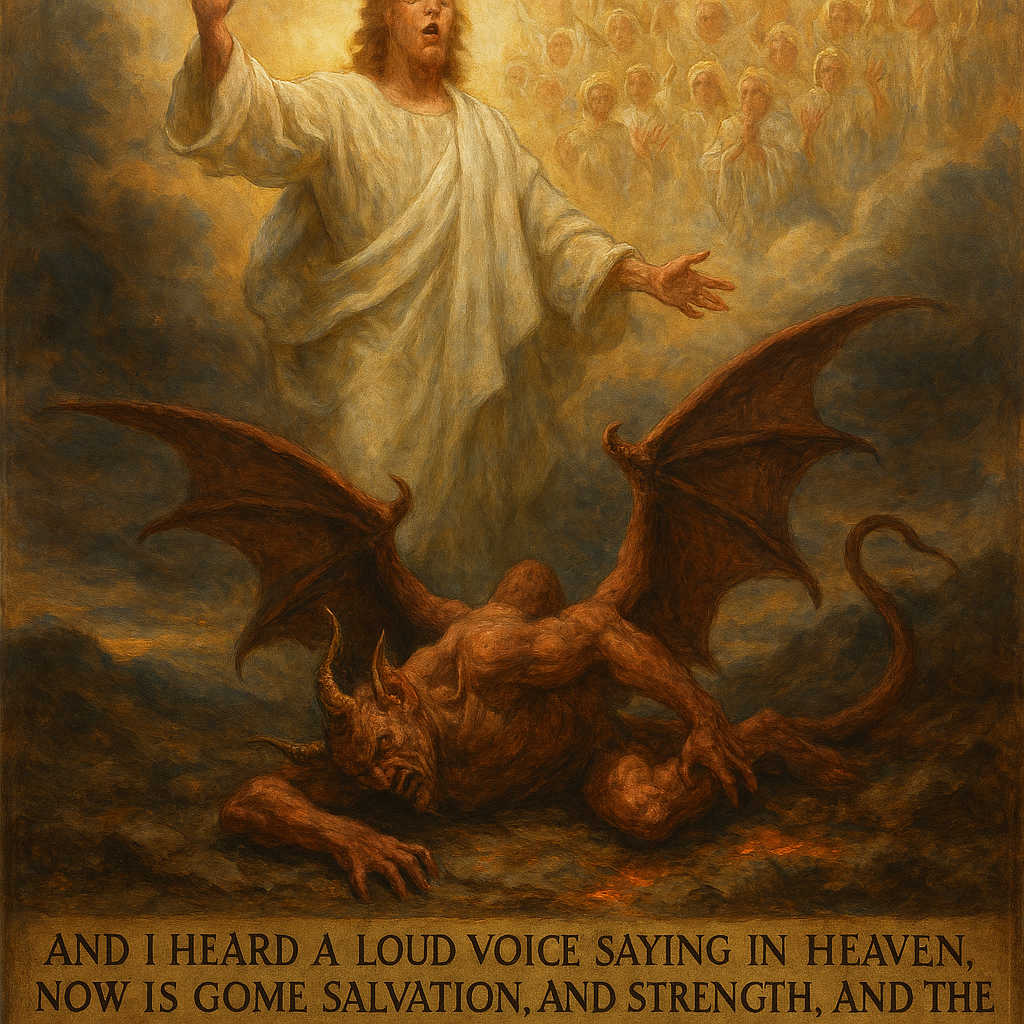
  • Revelation 12:10 The Accuser Who Accuses You to Yourself

    10.And I heard a loud voice saying in heaven, Now is come salvation, and strength, and the kingdom of our God, and the power of his Christ: for the accuser of our brethren is cast down, which accused them before our God day and night.

    The Hebrew meaning of the word satan — pronounced sah-tahn’ (saw-tawn’) — is adversary, accuser, withstand, or opponent. In Hebrew, it typically refers to one who obstructs or opposes, not the inherently evil being whose true name is Lucifer. We see this in Job 1:6, where the Hebrew text uses ‘haś-śāṭān’ — a functional title meaning the accuser, not a personal name. Over time, the title satan became associated with Lucifer.

    It is important to understand the distinction between title and name as to avoid the confusing question, if Satan was already cast out of Heaven, how could he petition God to accuse Job? It also clarifies how Satan works after his fall. For example, when Jesus said to Peter “get behind me, Satan” (Mark 8:33). We know that Jesus was not calling Peter, Satan. He was addressing the adversarial influence working through Peter at the time.

    Lucifer’s position may have shifted from the heavenly realm to the earthly, but his strategy remains the same — and in many ways, is even more complex. But what made Satan an accuser of mankind in the first place? What drove him to be an adversary of God? In a single word: pride. Pride is what not only drove Lucifer to oppose God, but motivated him to want to be above God. And interestingly, pride is also the sin that causes God to oppose man. James 4:6 tells us, “But he gives us more grace. That is why Scripture says: God opposes the proud but shows favor to the humble.

    Waging war in Heaven and being cast down to earth — along with the angels that followed Lucifer — makes it no mystery why God oppopses pride in humanity. God will not risk Heaven being threatened by pride a second time. Humility is not about being forced into subjection to God; it is showing reverance and gratitude for all that God has done for us, beginning with creating us in His image — something He did not do for the angels. Which may be the reason Satan became the accuser of mankind in the first place.

    Satan has two main strategies, one is to undermine God and faith in Him. We see this with Adam and Eve. Being cast out of Heaven made earth Satan’s domain. But when God placed Adam and Eve in the Garden of Eden, He gave them dominion over the earth. Satan temporarily regained that dominion when he was able to undermine Adam and Eve’s faith in God’s word by influencing them to eat from the forbidden tree. It was also Satan who influenced Cain to kill Abel when God refused his sacrifice — once again manipulating one of God’s children to oppose His instructions.

    Lucifer’s second strategy is the very one that gave him the name Satan — the accuser. But without the authority to accuse you before God, he now takes a more direct approach: he accuses you to yourself. God gives each of us gifts that we often recognize today as talents — we even call people “gifted” when they excel in a particular area. These gifts are administered to us by the Holy Spirit (1 Corinthians 12:4,11). While Scripture does not offer an exhaustive list of all the gifts God bestows on us, we do recognize they are gifts from Him. And your confidence in these gifts — and your confidence in general — is a key area where Satan strikes. His goal is to make you unwittingly undermine God’s work in you, and cause you to lose faith in God’s promises to you.

    Many people say they wish they had talent. Others say they wish they could find their calling. But it’s not a stretch to say that every person, deep in their heart, has already recognized the talent or calling God placed within them. When God gives a talent or places a calling on someone’s life, He also gives everything they need to excel in that area. One of the main things he gives is passion — a natural pull toward the very thing He has gifted you to do. Most people don’t associate their passion with it being a gift from God. But Satan does.

    Satan knows that not only are your gifts and passions a way for you to thrive in your natural life — but most importantly — when incorporated and used appropriately they bring glory to God — the Giver of gifts. When through his whispers he convinces you that you are not good enough to excel at your passions, he has done two things, made your life more difficult by settling for less, and kept glory from being brought to God’s name.

    2 Timothy 1:7 teaches us, “For God has not given us a spirit of fear and timidity, but of power, love, and self-discipline.” Notice that Paul refers to fear as a spirit, perhaps indicating that the spirit of fear is of Satan himself. And it’s no coincidence that in verse 6, Paul reminds Timothy of “the gift” when he says, “For this reason I remind you to fan into flame the gift of God, which is in you through the laying on of my hands.” Paul connects the gift with the spirit because the enemy attacks the gift through the spirit of fear. If he can create fear, timidity, or insecurity in you, Satan knows he can stifle the very gift God placed within you.

    Power, love, and self-discipline are attributes every one of us must have in order to master any craft God has placed within us. In order to excel, we must recognize the power God has given us to overcome weaknesses and obstacles. We must identify our passion as a love for the talent He placed inside us. And power and love are of little use without self-discipline. This is why Satan does anything he can to convince you that you are not strong enough to power through the adversity that makes accomplishments seem out of reach. Subtly, he will whisper to you that your passion isn’t a God-given gift, but only a dream “other people” — people supposedly better than you — succeed at. And with all the distractions, pleasures, and easier paths available today, it becomes easier for him to replace self-discipline with a participation trophy mindset. When everyone “wins” regardless of effort, what motivation is left to work harder and excel?

    God’s Word is not only for our instruction — it is also a weapon against the enemy. When the enemy attacks, we must use the Word against him. Speaking the Word of God gives us authority over the enemy in both the physical and spiritual realms. In the spiritual realm, angels assigned to protect us are activated when we stand on God’s Word. In the physical realm, declaring God’s Word in the presence of those the enemy works through will silence, expose, and drive back his influence. And as we use the Word of God not only as a weapon, but as a faith based foundation, it strengthens our confidence, builds our character and integrity, and tightens the very fabric of our lives.

    In conclusion, know who you are in Christ Jesus. Remind yourself “I am the righteousness of God in Christ Jesus, saved by His grace.” Always remember that the enemy works by accusing you to yourself. He tries to undermine your faith in God by attacking His promises to you, and the gifts and desires He has placed within you. He will subtly try to influence your thoughts, and even use others to weaken your confidence and create fear.

    Use the following Scriptures to speak authority over your life — whether under attack or not. And when you cannot speak them aloud, speak them silently in your heart. Even in silence, spirits respond to prayer.

    Psalm 18:2 “The LORD is my rock, my fortress and my deliverer; my God is my rock, in whom I take refuge, my shield and the horn of my salvation, my stronghold.”

    Philippians 4:13 “For I can do everything through Christ, who gives me strength.”

    Romans 8:28 “And we know that all things work together for good to those who love God, to those who are the called according to His purpose.”

    Philippians 4:19 “And my God will meet all my needs according to the riches of His glory in Christ Jesus.” (Adjusted from “your” to “my” for personal declaration.)

    Psalm 23:1-5 “The LORD is my shepherd; I shall not want.

    He maketh me to lie down in green pastures:

    he leadeth me beside the still waters.

    He restoreth my soul:

    he leadeth me in the paths of righteousness for his name’s sake.

    Yea, though I walk through the valley of the shadow of death, I will fear no evil: for thou art with me; thy rod and thy staff they comfort me.

    Thou preparest a table before me in the presence of mine enemies: thou anointest my head with oil; my cup runneth over.”

    Amen.

    • Philippians 2:13-15 A Shining Light in a Crooked and Perverse World

      13. For it is God which worketh in you, both to will, and to do, of His good pleasure.
      14. Do all things without complaining, and disputing:
      15. That ye may be blameless and harmless, the sons of God, without rebuke, in the midst of a crooked and perverse nation, among whom you shine as lights in the world.

      In a dark world, you would think it would be easy for God’s light to shine through His children. But is the world more wicked and evil today than it ever has been? Are believers being the minority of the global population, something new to our age? And is it really difficult to find God’s will for our lives, or do the very things He warns against — selfish ambition, covetousness, anger, and discontentment — blind us from seeing His will clearly?

      Jesus knew how essential it was for us to receive the Holy Spirit. Before going to the Cross he told His disciples that “it is expedient for you that I go away: for if I go not away, the Comforter will not come unto you” (John 16:7). Our understanding of what was taking place may become clearer if we read John 13-17 as a changing of the guard — a transition from Jesus’ earthly ministry, where He laid the path for salvation and being born again, to God working directly with and in His children, preparing them for a life of service and for the Kingdom of Heaven.

      Philippians 2:13 teaches us, “For it is God which worketh in you, both to will, and to do, of His good pleasure.” This is the accomplishing work of the Holy Spirit in our lives. 1 Corinthians 2:12 declares, “Now we have received, not the spirit of the world, but the Spirit which is of God, that we might know the things that are freely given to us of God.”

      We know that since the fall of man, the god of the fallen world is Satan, which makes the spirit of the world his spirit. It is a dangerous thing for believers to assume his influence is limited to unbelievers. On the contrary, the evil one has little reason to waste his efforts on those already separated from God — his focus is on those who follow Christ. This is why 1 Peter 5:8 gives such a stark warning to believers, “Be sober, be vigilant: because your adversary the devil, as a roaring lion walketh about, seeking whom he may devour.”

      It is interesting that Peter chose a lion to describe the devil. Jesus is from the tribe of Judah, and the lion represents the tribe of Judah. 2 Corinthians 11:14 may tell why Peter chose this example, it says, “And no marvel, for Satan himself is transformed into an angel of light.” It may be that, finding God’s will for us becomes difficult when we confuse the enemy’s imitation of light for the true light of God. When what is actually darkness convinces us that it is the work of the Holy Spirit, faith can be severly tested.

      Jesus calls the Holy Spirit the “Comforter” and says He will lead us to all truth (John 14:16). He says this with good reason. Philippians 2:14 instructs us to “Do all things without complaining and disputing.” Complaining blinds us from seeing any good in circumstances we may not prefer, and it blinds us from seeing how God may turn those circumstances in our favor. In every situation, the Comforter will keeps us in understanding — if we remain calm enough to hear His whispers or sense what the natural world calls intuition. The wisdom that leads you to make decisions you wouldn’t otherwise make — decisions that save, protect, and lead you to favor — is not your own. It is the Spirit of God within you.

      When we dispute with others, confusion becomes thicker and the truth gets buried deeper. This is why 2 Timothy 2:23 instructs us to “Have nothing to do with foolish, ignorant controversies; you know that they breed quarrels.” When we take part in these things, we become harmful to others through verbal abuse, we open ourselves to judgment by flirting with hypocrisy, and we risk giving those with shallow faith — and unbelievers as well — a reason to doubt that grace and salvation are truly at work in our lives.

      Being a Christian doesn’t rest only on what we believe individually, but on demonstrating those beliefs in how we react when challenged, provoked, or baited into disputes or debates. If we believe that Jesus is The Way, then we are to carry ourselves in the way He did. Jesus wasn’t blameless because He never became angry — Scripture shows us He became angry. He was angered by the mistreatment of His Father’s house, by the Pharisees for their hypocriscy of the Law, and He even rebuked Peter publicly. But unlike carnal anger, Jesus was blamelss because His anger was righteous indignation — anger directed at injustice toward God and toward God’s children. This type of anger is not only purposeful, it is pure and protective.

      As children of God, the evil one is always trying to test our faith, and he does this by provocation. Seeking whether our reaction to his provocations will be righteous or fleshly? Consider the words of Revelation 12:10, “And I heard a loud voice saying in heaven, Now is come salvation, and strength, and the kingdom of our God, and the power of his Christ: for the accuser of our brethren is cast down, which accused them before our God day and night.

      Even though Satan accused us in the past — and no longer has the authority to accuse us before God — he still seeks to prove our faith is false. He couldn’t care less about us personally; what he cares about is making his darkness appear more powerful than God’s light. This is why, as God’s children and servants, we are called to bring glory to His name by allowing His light to shine through us. Living according to God’s will not only carries eternal reward in Heaven, but blessing in our natural lives as well. Jesus declares in John 10:10, “The thief cometh not, but for to steal, and to kill, and to destroy: I am come that they might have life, and that they might have it more abundantly.”

      God is not against abundance and prosperity; He desires to fulfill His promises to all His children. But we must do our part — not through works, a doctrine often argued, but through obedience to His will. This obedience is not to appear to be in subjection to God — free will is real, or to merely appear spiritual to others. But so that we may shine as lights of rightesousness in this crooked and perverse world, drawing as many as possible to His light. “The Lord is not slow in keeping his promise, as some understand slowness. Instead he is patient with you, not wanting anyone to perish, but everyone to come to repentance” (2 Peter 3:9).

      Amen.

    • Philippians 3:12-13 Leaving Your Past Behind to Find Your Calling

      12. Not that I have already attained, or am already perfected; but I press on, that I may lay hold of that for which Christ Jesus has also laid hold of me.
      13. No, dear brothers and sisters, I have not achieved it, but I focus on this one thing: Forgetting the past and looking forward to what lies ahead.

      One of the greatest attributes of the human condition is memory. Through memory we can relive some of our favorite moments in life — falling in love, the birth of children, personal and career acheivements. Failure of memeory, can have effects that range from a day ruined by searching for something misplaced, to the heartbreaking loss of independence seen in Alzheimers or dementia.

      But memory can also work against us in other ways — having adverse effects on our ability to discover and reach our potential. Memory is an attribute that can be a gift and a curse, literally, if we let it. When memory induces fear, it can be polarizing to an individual — turning goals into mere dreams, making ambition a faint voice in the background as we settle for the path of least resistance.

      A person once said to me, “sometimes you have to bring the past into the present.” Because I knew the context of the discussion, I knew they were talking about negative history — the kind that fuels anger and bitterness — not the positive history that inspires ambiton and promise. Since they were an elder, there was no use in trying to explain the damaging effect that mindset had on their life, their relationships, and the way others perceived them. What perplexed me most was seeing how this person would weaponize someone else’s past in an effeort to claim moral superiority.

      Before becoming the Apostle Paul, Saul of Tarsus lived in total contradiction to Jesus Christ — admitting this in Acts 26:9, “I used to believe that I ought to do everything I could to oppose the very name of Jesus the Nazarene.” Yet when Jesus placed a calling on his life to be the apostle to the Gentiles, he did not hesitate to wash his memory of past actions and embrace the very way he once hated. Even when The Twelve and other followers of The Way feared and doubted him because of his history, Paul stood firmly on his present state of mind — never waivering until becoming accepted for who he was in the present.

      Perhaps this is the reason Jesus placed the calling of Apostle to the Gentiles on Paul. He is living proof of the truth he was inspired to write. In Romans 8:35 Paul asks, “Who shall separate us from the love of Christ? Shall trouble or hardship or persecution or famine or nakedness or danger or sword?” And he answers his own question in Romans 8:37, “No, in all these things we are more than conquerors through Him who loved us.”

      If Jesus chose the one person whose life’s mission was to imprison and kill those who followed Him, why would Jesus hold your past against you? Why would he refuse to accept you into His family as a member of His Church Body?

      We who are called to follow Christ Jesus, must wash our minds of past sins and mistakes, in order to discover His calling for our lives. Even when others doubt our salvation or who we’ve become in Christ, we stand with full conviction, firmly planted in the cleansing that is taking place within us. Your past does not disqualify you from Jesus calling you brother or sister. If anything, He calls you even louder.

      Remember the parable of the lost sheep in Luke 15:3-7 — the shepherd left the ninety-nine sheep to go and find the one who was lost. Or what Jesus tells us in Luke 15:10, “In the same way, there is joy in the presence of God’s angels when even one sinner repents.

      Be the one lost sheep that Jesus carries on His shoulders in joy when you answer His call. Dare to be the reason God’s angels rejoice in Heaven when you repent and release your past. Leave your sins, regrets, and mistakes behind you. It is exactly what God does for us — and expects from us — as Psalm 103:12 declares, “As far as the east is from the west, so far has he removed our transgressions from us.”

      Amen.