The Lord Says: ‘For I know the plans I have for you,” declares the LORD, “plans to prosper you and not to harm you, plans to give you hope and a future‘” (Jeremiah 29:11).
Many believers experience their own wilderness moment—a season in which God deals individually with them to prepare them for the work of His will—or to simply realign them with His ways if they have drifted from Him. In these moments, faith and trust are strengthened as God strips away as the fleshly nature to the degree necessary to accomplish His purpose.
I do not use the terms believer or child of God as loosely as many do. While I do not judge anyone’s walk with Christ, my own backsliding and wilderness experience have taught me the difference between mouth service and a heart that truly seeks to align with God. That distinction is not one of my own—it is one the Holy Spirit Himself preserved in Scripture. God reveals this reality in Isaiah 29:13 when He says: “These people come near to me with their mouth and honor me with their lips, but their hearts are far from me. Their worship of me is based on merely human rules they have been taught.“
Scripture gives us three distinct wilderness experiences that are monumental in shaping our understanding of God’s truth, His judgment, and the work of the Holy Spirit. Though separated by centuries, they share one unmistakable thread—the number forty.
Moses began his wildenress experience at the age of forty after killing an Egyptian who was beating a Hebrew slave. He then fled to Midian where he spent the next forty years tending sheep—likely never recognizing it as a season of preparation for the future work of God. Yet, in that quiet, secluded place chosen by God, He was humbling Moses—stripping away the prince of Egypt and molding him into the shepherd of Israel. After forty years of spiritual formation, God appeared to Moses in the burning bush (Exodus 3), calling him into the very purpose he had been unknowingly prepared for—to lead God’s people out of slavery and to the Promised land.
The next wilderness experience is one that most, if not all of the religious world is familiar with—the Israelites’ journey in the wilderness. What should have only taken eleven days to reach the Promised land turned into an epic forty-year wandering. This was not God’s desire nor His divine plan; it was the result of the Israelites’ own choices, bringing God’s judgment upon them. I will not rehash the golden calf nor the plague of snakes, but I will say this: their disobedience, lack of faith, and fear caused an entire generation to miss the fulfillment of God’s promise. Yet even here, we see the meaning of God’s longsuffering. He gave that same generation forty years—to become obedient, faithful, and trusting of Him.
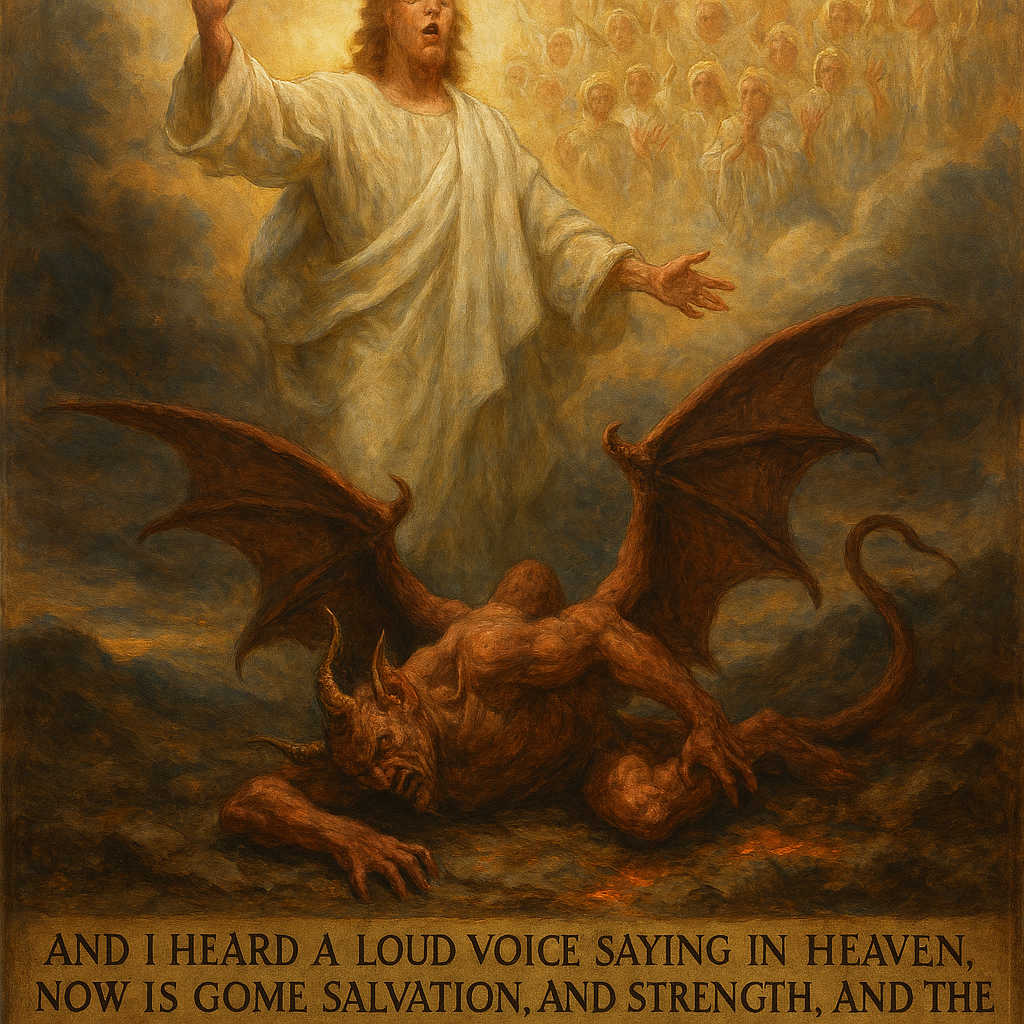
However, the wilderness moment that comes to mind for most Christians, especially those labeled as “Bible thumpers” (a title I consider a compliment)—is the forty days Jesus spent in the wilderness after His baptism and before His earthly ministry began. During this time, Jesus depended solely on the grace and strength of God to endure. Because Jesus was in the flesh, it was the flesh He battled—hunger, weakness, vulnerability—culminating with direct temptations of the devil himself. With every attack of Satan, Jesus pushed back by speaking the Word of God. And one of His most profound declarations was this: “Man shall not live on bread alone, but on every word that comes from the mouth of God” (Matthew 4:4).
Imagine the spiritual empowerment gained by Jesus when the Holy Spirit became His sustaining force through His weakest, most vulnerable moments. That same spiritual empowerment paved the way for His earthly ministry. As His flesh yearned and screamed, it could not be fed. No one and nothing—near or far—could console Him or distract Him from His suffering, unlike the comforts we have at our every beck and call today. In that isolation, His endurance created the wisdom, authority, and teachings He later gave to His disciples and left for us today.
Although this moment did not take place in a desert—quite the opposite in fact—we cannot forget that after Noah finished building the ark, it rained for forty days and forty nights. So what is it about the number forty that makes it so relevant to God? Is it mere coincidence? Far from it. Scripture proves otherwise.
For the Israelites, forty years signifies completion and renewal. The end of the Exodus generation gave rise to a new generation—one that would inherit the promises God made to Abraham through the Abrahamic Covenant. We also see divine intervention marked by the number forty when Moses spent forty days on Mount Sinai receiving the Ten Commandments. Again and again, Scripture shows us that the number forty is a marker of God’s work in the human heart and in human history.
- Preparation: Moses’ forty years in Midian shaped him into the shepherd God needed.
- Correction: Israel’s forty years in the wilderness disciplined a nation and revealed God’s longsuffering.
- Confrontation: Jesus’ forty days in the desert exposed the weakness of the flesh and defeated the schemes of Satan.
- Completion and Renewal: The end of one generation and the rise of another ready to inherit God’s promises.
- Divine Intervention: Forty days of rain in Noah’s time, and forty days on Sinai receiving God’s law.
I remember a statement my aunt made to me years ago. She told me that I stopped listening to my elders when I was twelve years old. Sparingly, over the years since, I had reflected on that statement—not to prove her wrong, but to understand why she was so certain about that specific age. I had already known that at a young age I drifted from my immediate family of three women—my grandmother, mother, and aunt. American culture often says that a woman can’t raise a man, but we know that isn’t true. What is true is this: God has a plan, the evil one is dedicated to disrupting that plan, and the ongoing war in the spiritual realm is far more active than most people—even many church leaders—ever recognize.
Years before age twelve—at what age I do not know—my grandmother repeatedly spoke a statement over me. She would say to me, “Jimmy, God has a plan for you, and you’re gonna learn that you can’t do the things your friends do and get away with it!” As a child who hadn’t even started “running with friends,” this was the most confusing message being drilled into my mind. I remember looking at her with utter bewilderment, yet the sternness in her eyes went deeper than her physical presence. I didn’t understand why, but I knew it was not her speaking. Something—Someone—much deeper was at work.
As time and life went on, the words my grandmother spoke grew louder and wiser in my thoughts. And at some point—as if God Himself was planting hints in my mind—I realized that only my grandmother and I had Hebrew names: hers, Martha, mine, James. Out of such a large southern family, this stood out to me. A family that could trace its roots back to Africa, raised for generations on the Old Testament, yet only two of us carried Hebrew names. It made no sense to me. Not culturally. Not historically. Not logically. But spiritually, it was a clue. A thread, a whisper of something God had woven long before I was born—especially after learning from my mother that my grandfather wanted me to be named Irving, after him—but my father insisted I be named James, after himself.
As a living testimony, I can honestly say I have learned two things to be absolute truth. The first is this: when God has a plan for your life that is bigger than the goals you have, nothing you do—not the sins you commit—can stand in the way of that plan. That is, of course, if you answer His call. God does not merely call once; His call grows more pronounced over time. But if a person insists on ignoring His voice and continues in the practice of sin, He will eventually leave them to the flesh they desire—or call them home.
The second truth is this: your natural desire to follow the flesh almost always precedes the answering of the spiritual call on one’s life. In most cases, the flesh arises before the Spirit awakens. There are rare exceptions—a few who seem to know their place in the spiritual realm from a very young age. But for most of us, the natural comes first, and the spiritual follows in God’s perfect timing.
At the risk of sounding like the Apostle Paul, I too will speak foolishly—with truth, and without fear of judgment. I say this because my life has been judged by many, yet it has proven something Scripture makes plain: in God’s perfect order the natural comes before the spiritual, for He is the only one without sin and the only true judge. I have lived this reality, I have embodied it,—and I have paid the price for it.
I once was a chief sinner—resident of the devil’s playground, the ghetto of Gary, Indiana, murder capital of the United States in the 1990’s. Intoxicated regularly. A merchant of the devil’s love potion. Constantly paranoid of police. A creator of rap music, authored lyrics that made Satan smile and angels cry. I fornicated frequently. You hear gunshots in movies; in my city they were the nightly serenade—and I grew immune to them. You’ve been to funerals, but I have attended many more. You’ve seen a mother cry: I’ve watched mothers drown in tears. And the trauma of those years followed me into adulthood, haunting me with a quiet, relentless PTSD.
But when God determined the time ordained before the foundation of the world had arrived to deliver me from the wicked ways of this world, and into a spiritual rebirth, His call became undeniable. Where my flesh once ruled without interference, a war erupted between my spirit and my flesh. Habits I once found pleasure in began to disgust me. People, places, and things I thought belonged were stripped away piece by piece. Hypocrisy—which I once ignored—became a flashing neon sign, and certain voices began to irritate my soul because the pride that accompanies hypocrisy was suddenly exposed for what it truly is—whether in family, friend, or acquaintance, it did not matter. The Holy Spirit was exposing truths about myself and those in my life—truths that showed who no longer belonged in my life, and who needed to be loved from a distance.
I know the process of dying to sin and being born again. It is a process that only takes place when you allow God to scrape, scrub, scrutinize, and sanitize you from the inside out. Pain alone does not make the spiritually blind enlightened. I learned that the only way for the same spiritually blinding veil we are all born with, to be lifted from my eyes, was to spend time with God through His Word, getting to know Him. My relationship with God could not be inherited by being taken to church by elders, especially when their time with God and His Word was limited to Sunday mornings. I began to realize that my grandmother was right: God did have a plan for me. But not even she could have known that His call was for me to become a vessel of His Word—a call that would take decades to unfold and would be as unorthodox to my family as the black sheep I have always been to them.
Spiritual cleansing turned into spiritual clarity. Scriptures that once seemed beyond my understanding began to come alive—speaking to me in a way that made them feel modern rather than ancient. I realized I had never truly known God. I had never been taught how to have a relationship with Him, or that He even desired one with me. I was told to “put God first” but never taught what that meant or how to do it. I was never taught that Christ was the foundation of the holidays we indulged in every year. Gifts from a fictional Santa replaced the gift of Christ’s life. A bunny and eggs I don’t even eat replaced the day Christ rose from the dead. I was taught that He was killed by those who hated Him, but not that He willingly sacrificed Himself so that I could have eternal life. The Holy Spirit was never mentioned, so I had no idea that God’s Spirit was waiting to dwell within me and commune with my spirit to guide me. But He did rise in me—regardless of what traditional religion and cherry-picked scriptures had left out.
Now age twelve made sense to me. I was never bothered by the absence of my earthly father, but I had always felt a missing connection in my life. What I didn’t know was, regardless of not truly knowing my Heavenly Father, He was there. My wilderness experience began at age twelve. Year after Year, circumstances allowed me to drift from my elders, and into the wilderness of the world. Surrounded by Satan’s soldiers, offering every temptation to ensure my eternal separation from God. Yet often showing hints of His Spirit within me and His angels protecting me. I earned the nickname “Preacher” in my early twenties. A name given to me by a few of the hardest thugs in my hood, because of the deep topics I would speak on and the ears that would gravitate to my words.
Spared from an early grave, God allowed every experience, pain, and loss to culminate into a spiritual awakening that grew over four decades—longsuffering now understood. At age fifty (year thirty-eight), I became an ordained minister in order to officiate the wedding of a very good friend. That same year, I attempted to start an online ministry, but God knew I wasn’t ready—life and theology still had to become one in me. Divine wisdom knew there was too much noise around me for that to happen.
Age fifty-one (year thirty-nine), I found myself living with my mother and aunt. I learned that my knowledge of Scripture had far surpassed anything they could teach me. To my surprise, since my grandmother’s passing, the kitchen television no longer played faith-based programs. Yet every morning, I made sure they were on. Only for my mother to turn from them when I left the room. My aunt—who often asked my mother questions because she didn’t fully understand what was taught in Sunday school—would fall silent when I entered the room. Her doubt in my biblical understanding was too great for her to ask me for clarity. In fact, they never once visited my online ministry. I was beginning to learn why God placed me back with my family.
I immersed myself in the Word—sermons, theology, study—bringing the prior ten years and my ongoing pursuit of God’s truth into focus. And that same year, the Holy Spirit led me to form my online ministry, Feeding the Flock Daily. Unknown to me, all the years I spent creating my own websites as a music producer, along with my experience as an independent political journalist and podcast host, had all been divine preparation for God’s work. When the time came, I knew exactly how to create the YouTube videos, purchase a domain, and secure a web host. With a writer’s background, I had no hesitation about writing devotionals.
At age fifty-two—year forty of my desert experience—Feeding the Flock Daily turned my long-held desire to write a book into a reality. I originally set out to write a book on Christians dealing with mental illness. But the Spirit made me understand the importance of demonstrating theological soundness before writing on a subject so deep and far-reaching. So I decided to turn fifty devotionals into a single body of work. But something remarkable happened around the completion of the thirty-fifth devotional: the Holy Spirit revealed that forty devotionals was the number required of me. Fifty carries worldly significance, but forty carries spiritual significance.
At the time of writing these final paragraphs, I am in the third month of the fortieth year, and I can honestly say it feels as though I have stepped out of a dry, blistering desert into a new life with new chapters and new beginnings. Not because I am no longer with family, but because I can now look back on my life without regret. I can see lessons being taught and character being built in every dark moment of my past. I can contrast those memories with the new man I am today—a man who walks in personal relationship with God, understanding what Jesus did for me, and recognizing how the Holy Spirit—not my intuition—has been guiding me throughout my life. As I look back on past friendships and relationships, I look forward to building new ones with the brothers and sisters in Christ I have recently gained. And who knows—perhaps some from my past will find Christ, and we will build new memories rooted in the Spirit..
As you read the devotional commentaries I have written, understand that each one carries a particular meaning for you. The Holy Spirit led me to the Scriptures and formed the words that will be in front of you. I am only a vessel who has allowed God to scrape, scrub, scrutinize, and sanitize me in preparation to do the work of feeding His flock. My prayer is that this work shows you that it’s not only acceptable but desired by God that you be vulnerable before Him. May you realize that you are never alone in Christ Jesus, and may you recognize that the Holy Spirit has led you to the spiritual truths you are about to read because He is your comforter, the One who leads you into all truth.
God bless you.
Amen.