And I will pray the Father, and he shall give you another Comforter, that he may abide with you for ever; Even the Spirit of truth; whom the world cannot receive, because it seeth him not, neither knoweth him: but ye know him; for he dwelleth with you, and shall be in you.
We see in John 14 a turning point in the disciples’ relationship with the Father and the Son—it is here that Jesus introduces the Holy Spirit to them, bringing to light the Trinity. Jesus is comforting His disciples while preparing them for His crucifixion and the work of the Cross. He knew the will of the Father for His own life: He must sacrifice Himself to bring salvation to all who would place their faith in Him. He was also aware that the disciples’ faith was still young and that their work in His absence would be far greater than anything they had previously done.
How fully did the disciples understand what Jesus was teaching them—that in His place would come the Spirit of God to dwell within them, and that those who did not believe in Him could not receive the gift of the Holy Spirit? Although the world cannot receive the Holy Spirit, the Spirit does work in the world to convict people of sin and draw them to God. We know there were times when the disciples had difficulty understanding Jesus as He spoke in parables, and titles such as “Comforter” and “Spirit of truth” likely would have been just as difficult for them to understand. The words in verse 17 would have been mind-boggling: “Even the Spirit of truth, whom the world cannot receive, because it sees Him not, neither knows Him: but ye know Him; for He dwells with you, and shall be in you.”
David, as king, was aware of the Spirit’s presence in his life, writing in Psalm 51:11: “Cast me not away from thy presence, and take not thy Holy Spirit from me.” He knew that the Spirit of God was his source of strength, wisdom, and ability to lead as king. David knew that having the Spirit removed from him would mean losing the divine presence he depended on. Jesus Himself affirmed David’s awareness of the Spirit in Mark 12:36 when He declared: “For David himself said by the Holy Spirit, the Lord said to my Lord, Sit thou on My right hand, till I make thine enemies thy footstool.“
We see the Holy Spirit present from the very beginning, in Genesis 1:2: “And the earth was without form, and void; and darkness was upon the face of the deep. And the Spirit of God moved upon the face of the waters.” In the Old Testament, the Spirit was often given to those God chose for specific tasks. It is difficult to imagine Moses being able to lead God’s people out of Egypt or perform miracles with his staff had it not been for the Holy Spirit empowering him.
In fact, after instructing Moses to build the tabernacle, God spoke of the Holy Spirit’s work. In Exodus 31:2–3 God says, “See, I have called by name Bezalel the son of Uri, the son of Hur, of the tribe of Judah: and I have filled him with the Spirit of God, in wisdom, and in understanding, and in knowledge, and in all manner of workmanship.” The craftsmen and craftswomen involved in making of the tabernacle would have received the Holy Spirit in order to fulfill their duties.
In Samson, we see the awesome ability the Holy Spirit has to bestow power upon God’s children. When faced with a lion, Judges 14:6 tells us of Samson: “And the Spirit of the LORD came mightily upon him, and he tore the lion apart as one would have torn apart a young goat, though he had nothing in his hand.” Yet we also see the Spirit’s departure from Samson after he revealed to Delilah the secret behind his strength. Judges 16:20 records: “And she said, “The Philistines are upon you, Samson!” So he awoke from his sleep, and said, “I will go out as before, at other times, and shake myself free!” But he did not know that the LORD had departed from him.”
It was the Spirit of God who empowered Jesus in His earthly ministry—not only the miracles, but also the extraordinary wisdom He displayed when speaking with experts of the law at age twelve (Luke 2:46–49). In John 14, Jesus redefined the role the Holy Spirit would play in the life of the believer, declaring the Spirit would “abide with you forever.” He would become a Comforter in times of trial and a bearer of truth amidst the endless lies of the world. No longer bestowed upon the believer for a season or specific duty; the Spirit would now be sent from God to dwell within the believer permanently.
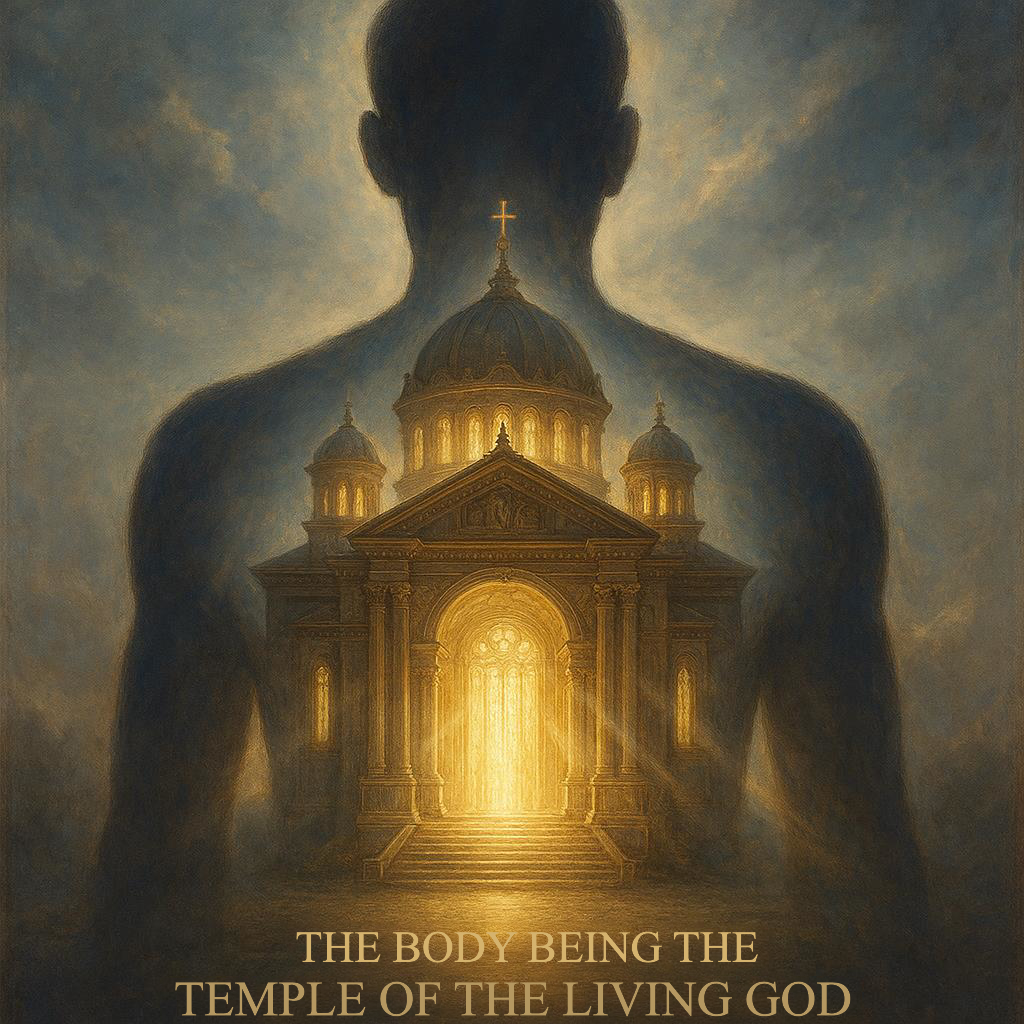
Does the Christian today understand any better than the disciples the role of the Holy Spirit? In 1 Corinthians 6:19: Paul declares: “Or do you not know that your body is the temple of the Holy Spirit who is in you, whom you have from God, and you are not your own?” Although God may not manifest His presence in the same ways recorded in the days of antiquity, through faith in Christ Jesus as Lord and Savior, He does in the form of His Spirit, dwell in every believer. Like the disciples, the Spirit is our Comforter in times of sorrow and trials. He brings to our understanding meaning of the Scriptures. Those of the world may have intuition, but the Christian has the voice of the Holy Spirit guiding them. Yet we must remember the words of Hebrews 3:7–11: “Wherefore (as the Holy Ghost saith, To day if ye will hear his voice, Harden not your hearts, as in the provocation, in the day of temptation in the wilderness: When your fathers tempted me, proved me, and saw my works forty years. Wherefore I was grieved with that generation, and said, They do alway err in their heart; and they have not known my ways. So I sware in my wrath, They shall not enter into my rest.”
Amen.